feast of St. Marina.
July 17, 2025
A Grateful Acknowledgment and a New Chapter for Our Parish
August 13, 2025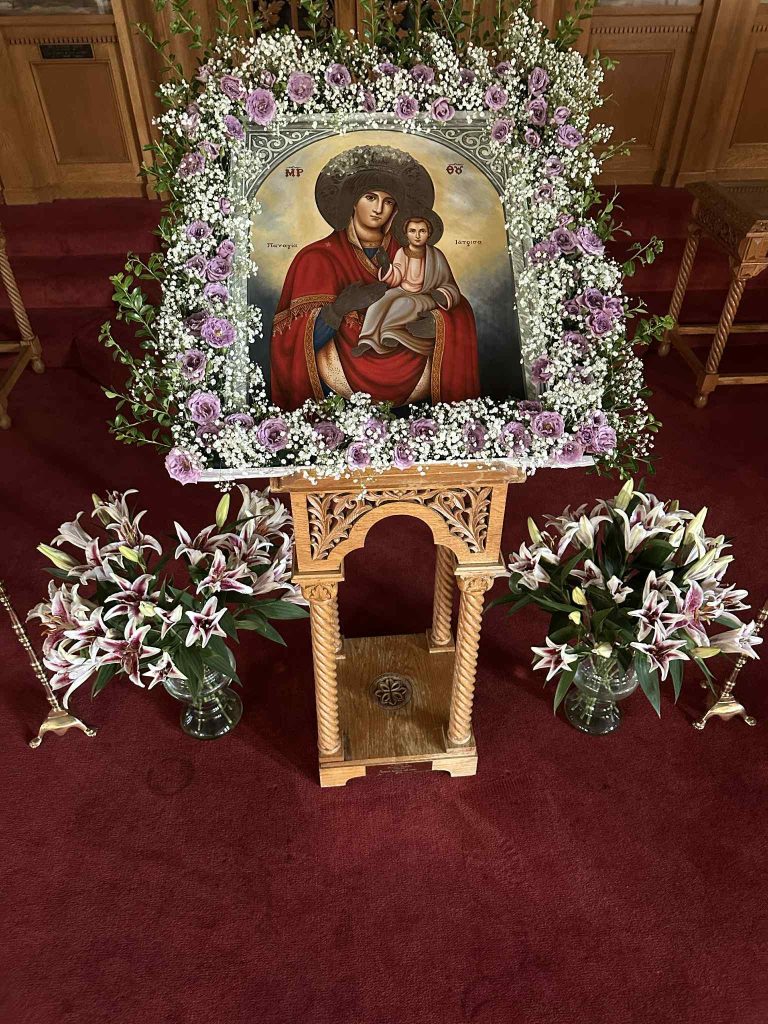
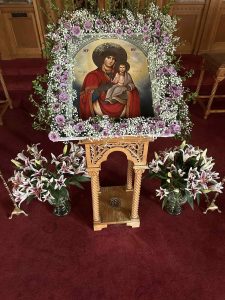
Paraklesis sermon – “By many temptations am I distressed …”
Ελληνικό κείμενο ακολουθεί…
Beloved brothers and sisters in Christ,
As we enter these sacred days of the Fast in honor of our Most Holy Theotokos, the Church gives us a precious spiritual gift—the Paraklesis Services, filled with prayerful hymns that reflect the very cry of the soul in suffering. One of these hymns, so simple and yet so profound, speaks directly to the heart:
“By many temptations am I distressed. Praying to be rescued, for salvation I run to you. O Virgin and Mother of the Logos, from all afflictions and evils deliver me.”
This verse is more than poetry. It is theology made prayer. It is the voice of every soul that has found itself surrounded by trials—temptations, sorrows, fears, and struggles of every kind. In the Orthodox spiritual tradition, “temptations” are not just moral tests; they are any circumstance—visible or invisible—that threatens to break our communion with God. They are the burdens that press on the soul, the distractions that cloud the mind, and the sins that wound the heart.
And so, in the midst of this distress, the believer runs to the Theotokos—not casually, not as an option among many, but with urgency and trust, praying to be rescued. Not just from worldly discomforts, but for the salvation of the soul—a salvation which is ultimately found in her Son, Jesus Christ, the Logos of God, whom she bore.
We call her “Virgin and Mother of the Logos.” This title contains the very mystery of the Incarnation. She is Virgin—pure, undefiled, wholly dedicated to God. And she is Mother—not just biologically, but spiritually, maternally, and cosmically, as the one who gave flesh to the Word of God. She is our bridge between heaven and earth, our intercessor and our protector, not in isolation, but always in union with the will and mercy of her Son.
The faithful do not turn to her as a divine figure separate from Christ. We run to her because she leads us to Him. She is our refuge because she has already walked the path of human suffering, obedience, and surrender. And now, enthroned in glory next to her Son, she continues to care for the world—not with power as the world understands it, but with divine compassion and maternal boldness.
“From all afflictions and evils deliver me.” This is the plea. And how many times have we whispered these words in moments of despair? In sickness, in loss, in fear, in temptation—we run to her not because life will suddenly become easy, but because she will be with us in the struggle, reminding us that Christ is near, that the cross leads to resurrection, and that we are never alone.
In her we see what it means to be fully human and fully faithful. She stands not only as an intercessor, but as a model for the Church—a sign of what we are all called to become when we say “yes” to God, when we trust in His mercy, and when we surrender our will to His.
So, dear brothers and sisters, as we continue this season of prayer, let us take these words deeply into our hearts:
“Praying to be rescued, for salvation I run to you.”
Let us truly run to her—not in superstition, but in faith. Let us trust in her prayers. Let us hold on to her love. And let us be confident that she, the Virgin and Mother of the Logos, will deliver us—from despair, from sin, from fear, and ultimately, from all that separates us from her Son, our Savior.
Amen.
Κήρυγμα – “Πολλοῖς συνεχόμενος πειρασμοῖς…”
Ἀγαπητοί μου ἀδελφοί,
Καθώς διανύουμε τις ιερές ημέρες της Νηστείας τῆς Παναγίας μας, η Εκκλησία μάς προσφέρει ως προσευχητικό ανάπαυμα τούς παρακλητικούς Κανόνες, μέσα στους οποίους ξεδιπλώνεται όλη η θεολογική και πνευματική εμπειρία του πιστού που υποφέρει, πονά, αλλά δεν απελπίζεται. Σήμερα θα σταθούμε σε έναν στίχο γεμάτο παρηγοριά:
«Πολλοῖς συνεχόμενος πειρασμοῖς, πρὸς σὲ καταφεύγω, σωτηρίαν ἐπιζητῶν· Ὦ Μῆτερ τοῦ Λόγου καὶ Παρθένε, τῶν δυσχερῶν καὶ δεινῶν με διάσωσον.»
Ο ύμνος αυτός είναι κραυγή καρδιάς. Είναι η φωνή κάθε ανθρώπου που περνά δοκιμασίες – εσωτερικές και εξωτερικές, πνευματικές και σωματικές. Ο πειρασμός στην Ορθόδοξη Παράδοση δεν είναι απλώς μια δυσκολία, αλλά κάθε κατάσταση που απειλεί τη σχέση μας με τον Θεό· κάθε συνθήκη που μάς οδηγεί στην αμφιβολία, στον φόβο, στον εγωισμό ή την απελπισία.
Ο υμνωδός λοιπόν δεν στηρίζεται στις δικές του δυνάμεις. Δεν ζητά βοήθεια από ανθρώπινους μηχανισμούς σωτηρίας. Καταφεύγει στην Παναγία, τη Μητέρα τοῦ Λόγου, την Πλατυτέρα τῶν Ουρανῶν, όχι απλώς ως καταφύγιο συναισθηματικό, αλλά ως οντολογικό πρόσωπο μέσα στο μυστήριο της σωτηρίας. Γιατί μόνο εκείνη, η οποία εσώκλεισε τον Ἀχώρητο Θεό στη μήτρα της, μπορεί να γίνει πραγματική μεσίτρια και βοηθός στις δοκιμασίες μας.
Η Ορθόδοξη Θεολογία μάς διδάσκει ότι η Παναγία δεν είναι απλώς ένα ιερό πρόσωπο του παρελθόντος. Είναι η εικόνα της τελειωμένης Εκκλησίας, του ανθρώπου που συνεργάζεται πλήρως με το θέλημα του Θεού. Όταν ο πιστός καταφεύγει σε αυτήν, αναγνωρίζει στην ίδια την ύπαρξή της ότι η νίκη κατά του πειρασμού, κατά του κακού και του θανάτου, είναι δυνατή μόνο μέσα στον Χριστό, τον οποίο εκείνη εγέννησε.
Και τί ζητά ο προσευχόμενος; Σωτηρία. Όχι μόνο απαλλαγή από προβλήματα, αλλά τη σωτηρία της ψυχής του, τη λύτρωση από το κακό που κατατρώγει την ύπαρξή του. Και απευθύνεται στην Παρθένο όχι ως σε αυτόνομη σωτήρα, αλλά ως σε αυτήν που οδηγεί στον Σωτήρα· ως σε εκείνη που, με τη δική της υπακοή, έγινε η οδός δι᾽ ἧς ἦλθεν ὁ Λυτρωτής.
Στην Ορθόδοξη Πίστη, η σχέση με την Παναγία δεν είναι θεωρητική. Είναι σχέση καρδιάς, σχέση εμπιστοσύνης και ελπίδας. Όταν ο Χριστός πάνω στον Σταυρό λέει στον Ιωάννη: «Ἴδε ἡ μήτηρ σου», μας παραδίδει την Παναγία ως Μητέρα όλης της Εκκλησίας· και κάθε φορά που την επικαλούμαστε, ανανεώνουμε αυτή τη σχέση μητρικής στοργής, θυσιαστικής προστασίας και ουράνιας μεσιτείας.
Πόσοι από εμάς δεν έχουμε πει με δάκρυα αυτόν τον στίχο;
«Πολλοῖς συνεχόμενος πειρασμοῖς…»
Κι όμως, ποτέ δεν μένει αναπάντητη αυτή η προσευχή, όταν γίνεται με πίστη και ταπείνωση. Γιατί η Παναγία δεν σώζει απλώς από κινδύνους· μας οδηγεί στον Χριστό. Μας παίρνει από το χέρι και μας ανεβάζει – όπως εκείνη ανέβηκε – στον δρόμο της ταπείνωσης, της σιωπής, της υπακοής στο θέλημα του Θεού.
Κλείνοντας, αδελφοί μου, ας θυμηθούμε πως κάθε φορά που λέμε:
«Πρὸς σὲ καταφεύγω…»
ομολογούμε την ελπίδα μας όχι μόνο στην Παναγία, αλλά στον ίδιο τον Θεό της. Και εκείνη, η γλυκύτατη μας Μητέρα, πάντοτε ακούει. Και πάντοτε, με τρόπο μυστικό και στοργικό, παρεμβαίνει. Όχι απαραίτητα για να εξαφανίσει τους πειρασμούς, αλλά για να μας χαρίσει δύναμη, υπομονή, και τελικά… τη σωτηρία.
Αμήν.